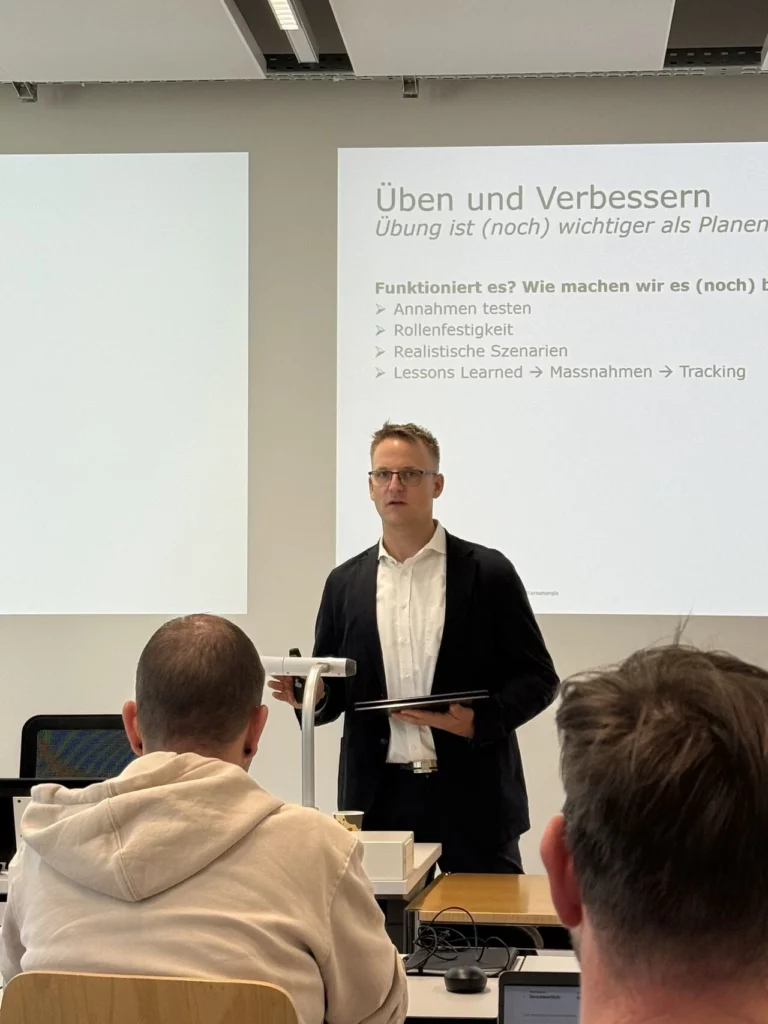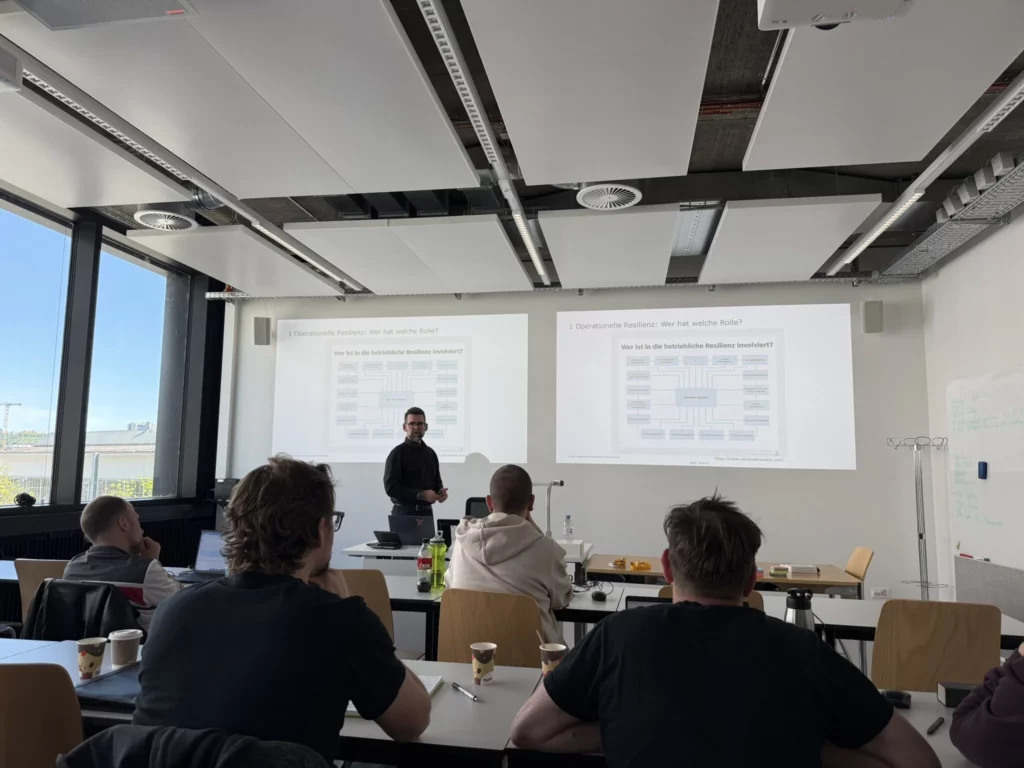
On April 24, 2026, the first part of the “Emergency Management” module of the CAS “Nuclear Energy Work Environment” program began. Simon Rüegger and Michael Marty from the Axpo Group provided a practical and insightful introduction to business continuity management as well as crisis and emergency management.
It was demonstrated that, in an emergency, the ability to act appropriately even under stress is what matters most. ⚡ As soon as an extraordinary event occurs, people switch to “survival mode.” This is precisely why preparation, training, and clear structures are crucial for an organization to remain resilient. The following distinction applies:
🔹Emergency: under extreme time pressure – what matters is the fastest and best possible solution, not perfection
🔹Crisis: longer duration – more time to make decisions, but just as dependent on preparation
In both cases, the same rule applies: nothing works without a functioning network. Clear roles, defined interfaces, and a common language are the foundation for effective action. 🤝
Key takeaways:
🛠️ Good preparation is everything: Effective risk management reduces the likelihood of incidents occurring. Without this foundation, the only option left in an emergency is often to “put out fires.”
🎯 Prioritizing under pressure: Clear structures and a thorough business impact analysis reveal what is truly critical.
🧩 Strategies are based on decisions: What is required to keep an organization running at a minimum level? How long can an outage be tolerated? These questions must be answered in advance.
🦺 Regular drills build confidence: It is only through drills that weaknesses become apparent. Drills also strengthen collaboration across organizational boundaries.
🔁 Continuity, not a one-time project: Business continuity management and risk management are ongoing processes that must be continuously adapted to new risks and dependencies.
It is particularly evident in high-reliability organizations, such as nuclear power plants, that resilience can only be achieved through consistent preparation, a culture of safety, and continuous learning. 💡
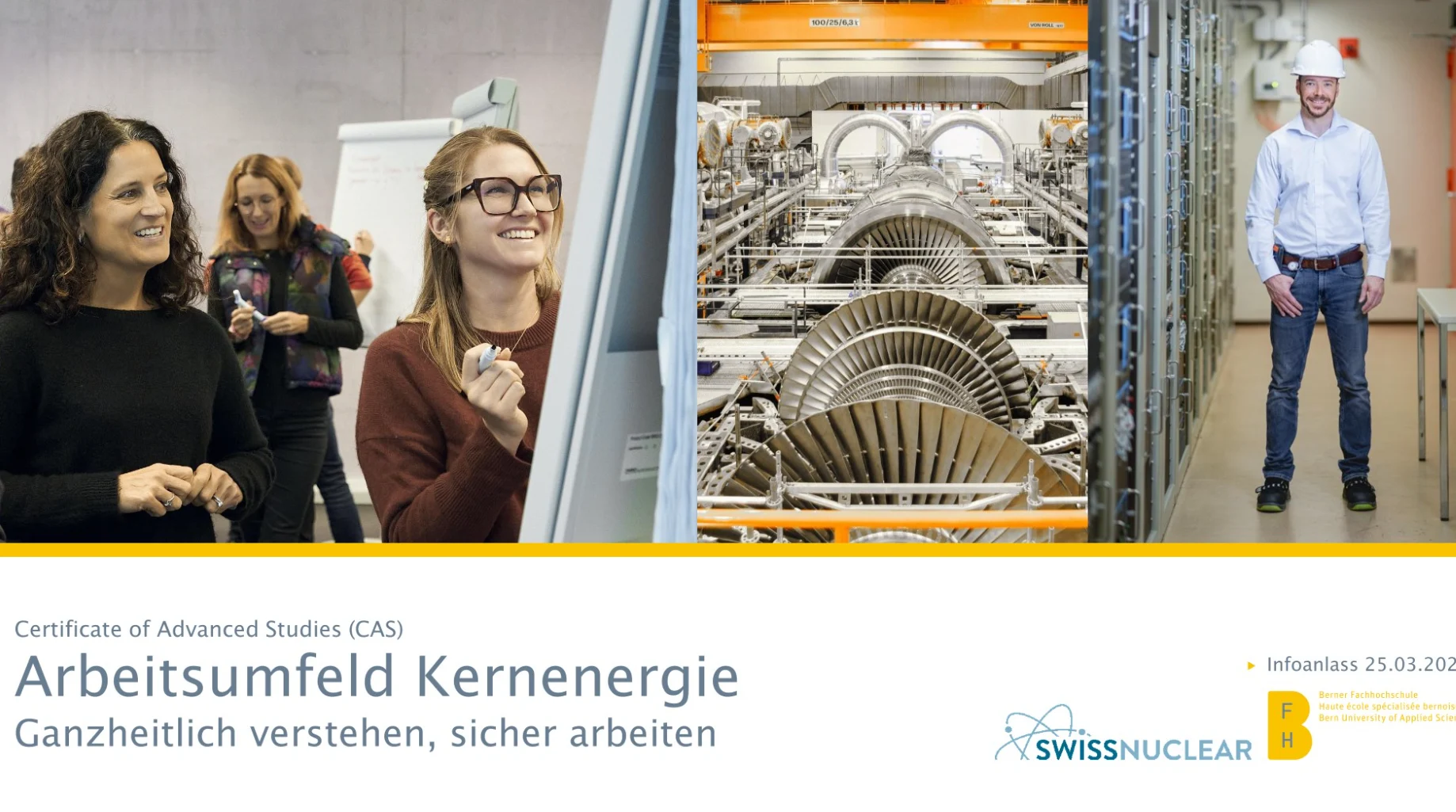
🔎 Further information about CAS:
CAS Working Environment Nuclear Energy | BFH