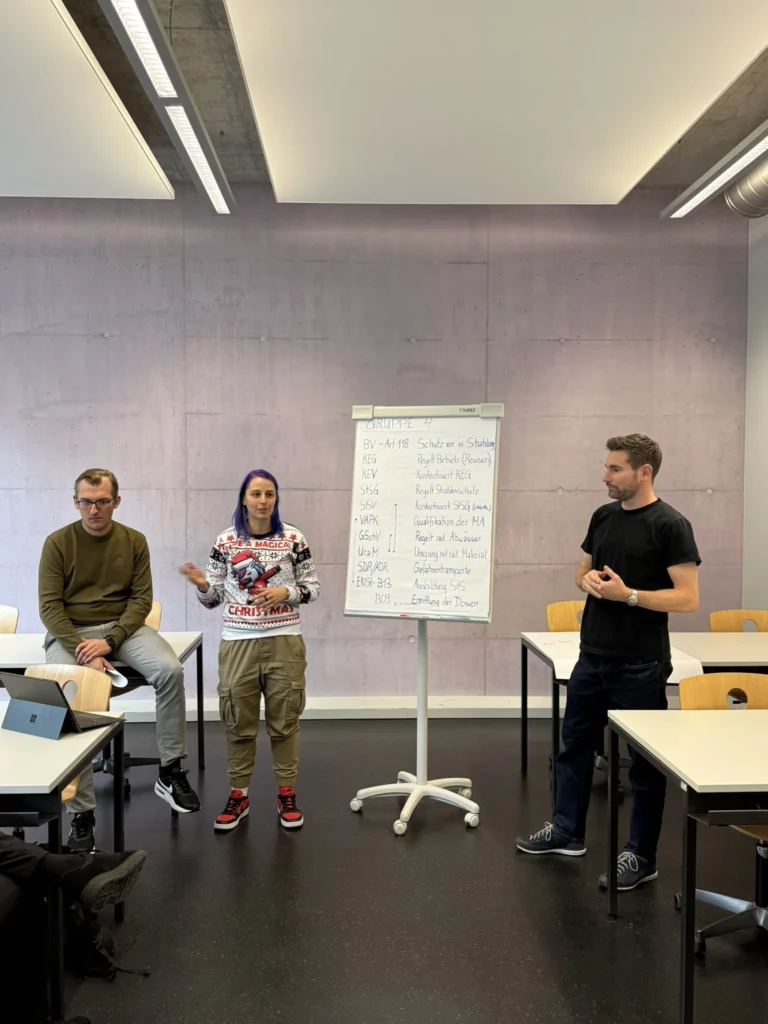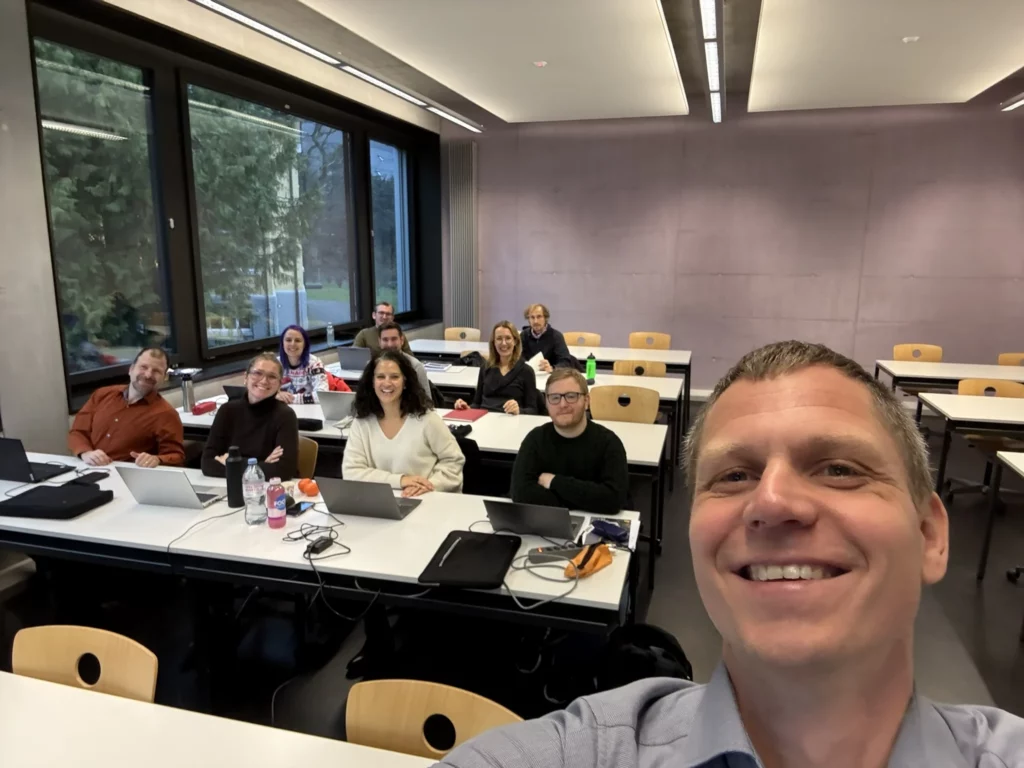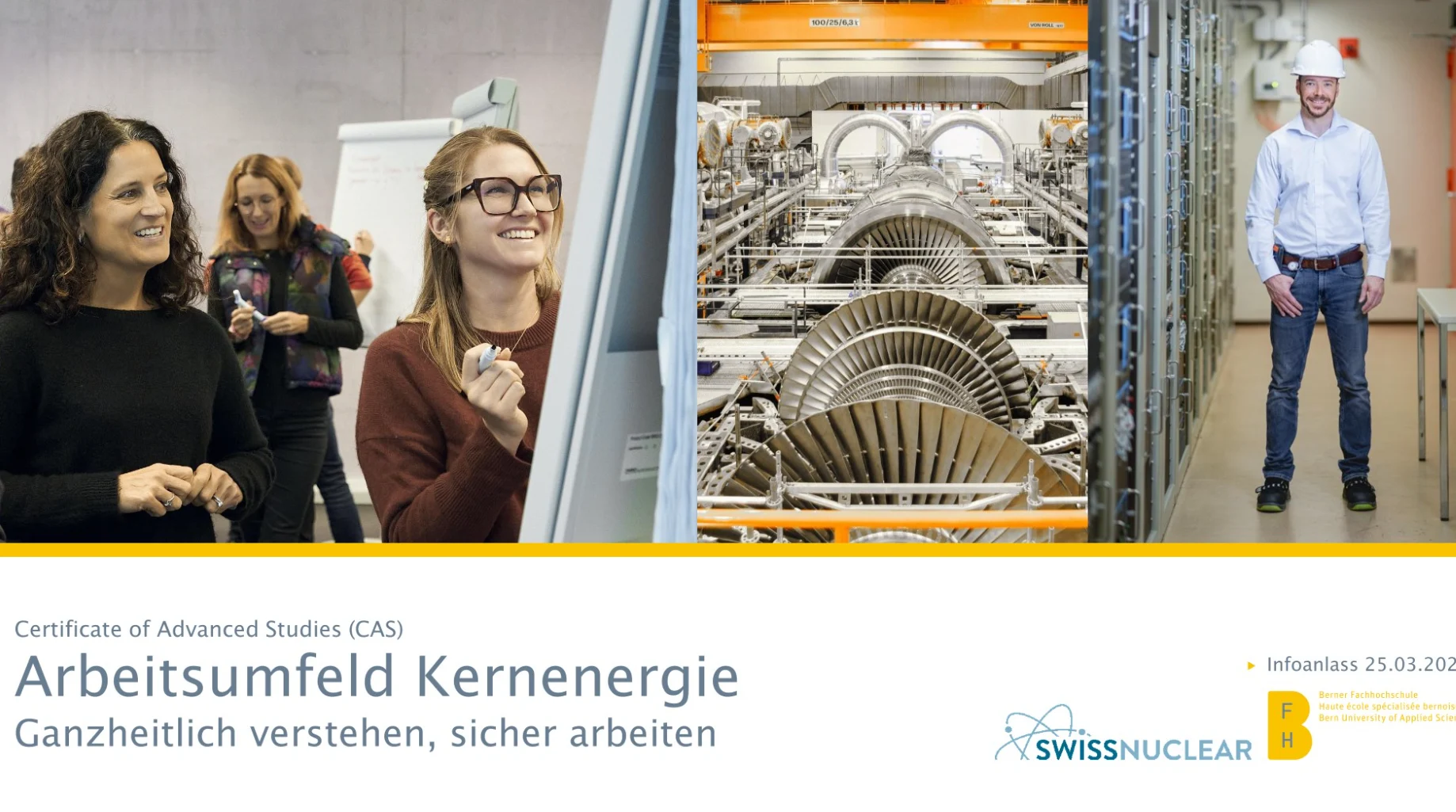
On December 5, 2025, the fifth day of the CAS “Nuclear Energy Work Environment” course took place, marking the conclusion of the first block of required courses, including the exam.
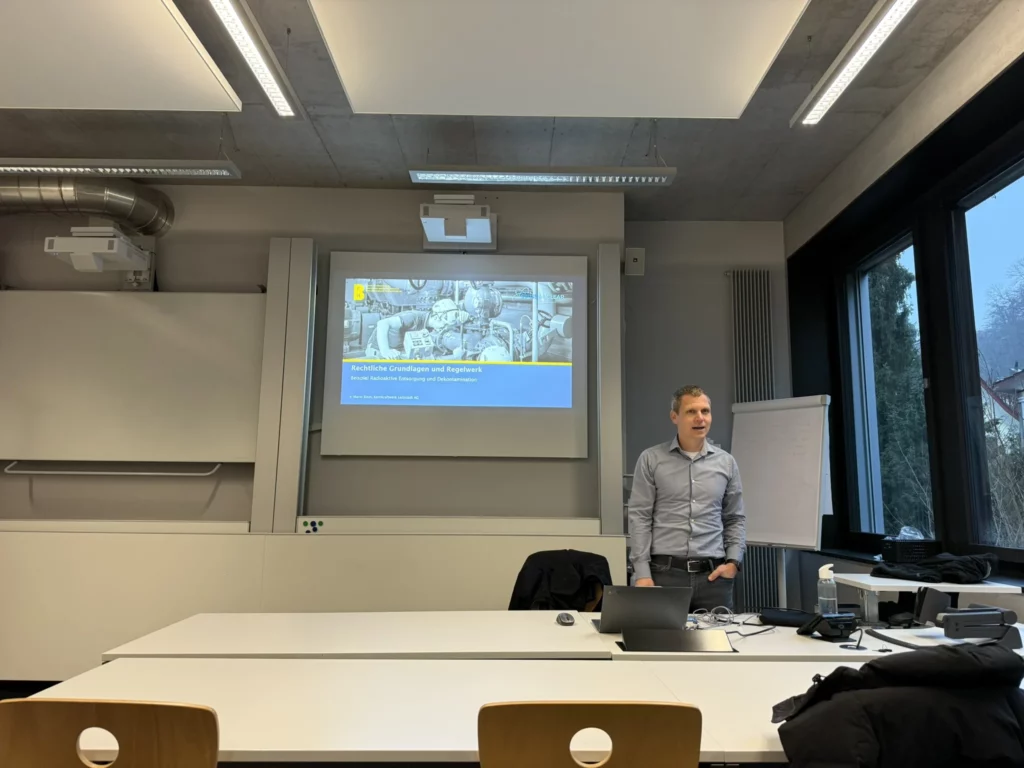
🔎 In the morning, Mario Stein (Leibstadt Nuclear Power Plant) provided an overview of the legal framework as well as the technical and organizational processes surrounding the disposal and decontamination of radioactive waste in Switzerland.
Every day, a wide variety of radioactive waste is generated at nuclear facilities—ranging from protective clothing and respirators to end-of-life large components such as steam turbines. These must be decontaminated and stored temporarily under the strictest conditions, always with the goal of keeping radiation exposure to humans and the environment as low as possible.
🧽 Various methods are used to decontaminate contaminated surfaces:
– Industrial laundry service for cleaning protective clothing and masks – an important contribution to waste reduction.
– Glass bead blasting for removing surface contamination.
– High-pressure water jet equipment and ultrasonic baths for stubborn deposits.
– Decontamination boxes for remote-controlled work involving stainless steel filters or other sensitive components.
Installed system components, walkways, and tools are also regularly decontaminated to prevent contamination spread.
⚛️ Key findings:
– The volume of radioactive waste is small compared to that of conventional waste (a ratio of 1:2,000).
– Lightly contaminated waste, such as clothing, is incinerated in the plasma furnace at Zwilag. This reduces the waste volume by about 75%.
– Resins and concentrates are encased in cement, bitumen, or polystyrene in drums.
– Large components are stored for up to 30 years until their radioactivity has decayed.
⚙️ Switzerland has a comprehensive regulatory framework of laws, ordinances, and guidelines governing all stages of radioactive waste disposal and decontamination.
💡 Key Takeaways:
Radioactive waste disposal and decontamination involve a wide range of activities. Therefore, a thorough understanding of Swiss regulations is essential in order to
– To protect people and the environment.
– To ensure the safety of personnel.
– To enable the safe and economical operation of the facility.
– To minimize waste.
– To avoid placing an unnecessary burden on future generations.
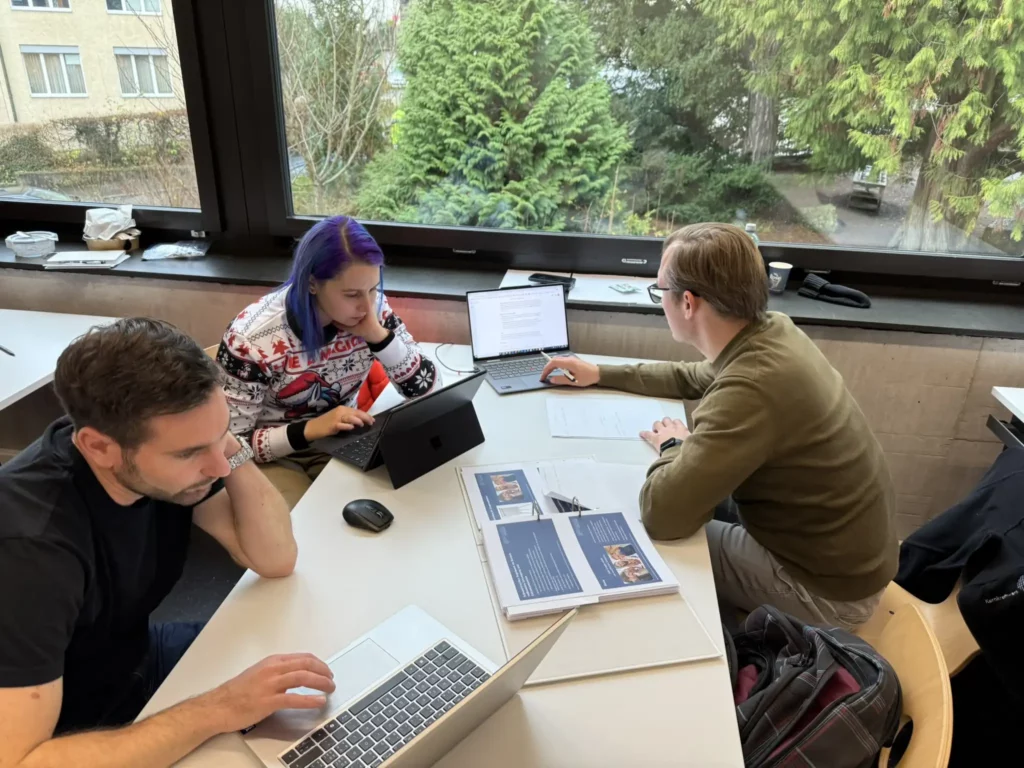
📘 In the afternoon, the students took their first CAS exam—marking the completion of the first block of required modules.
🔎 Further information about CAS:
CAS Working Environment Nuclear Energy