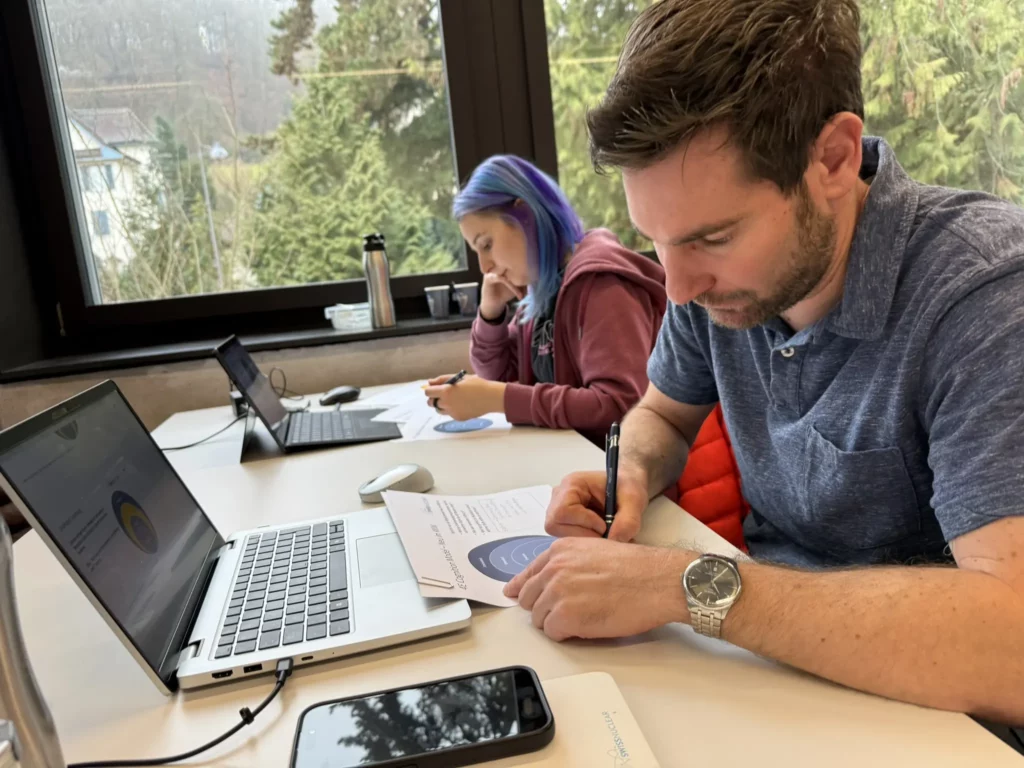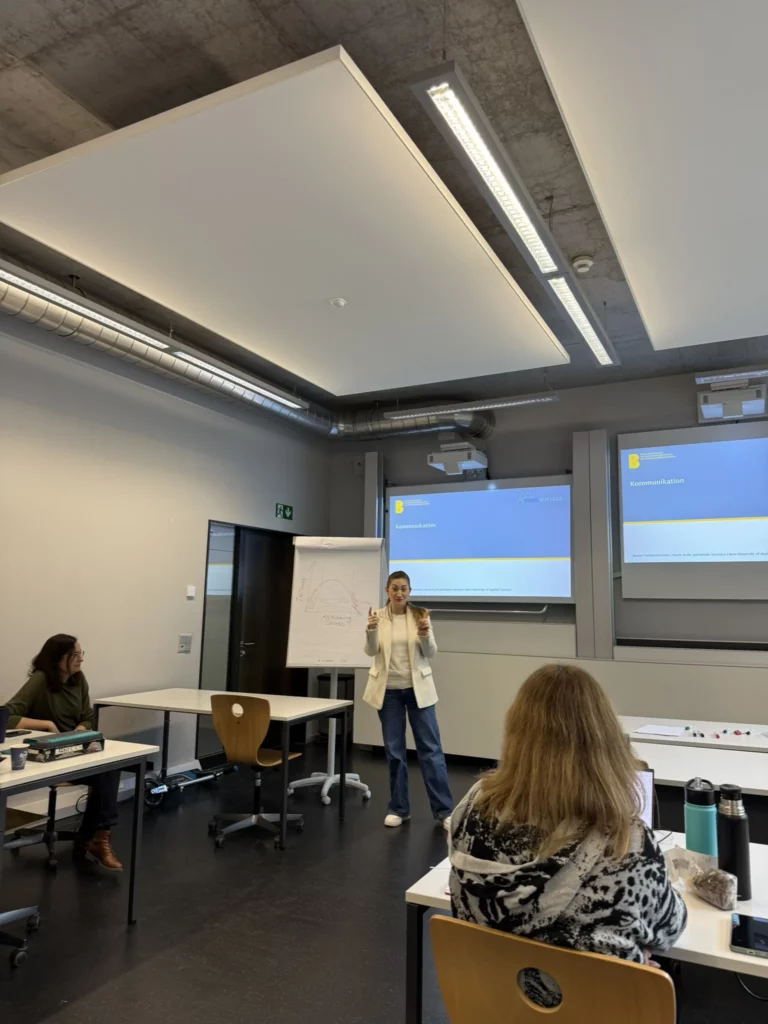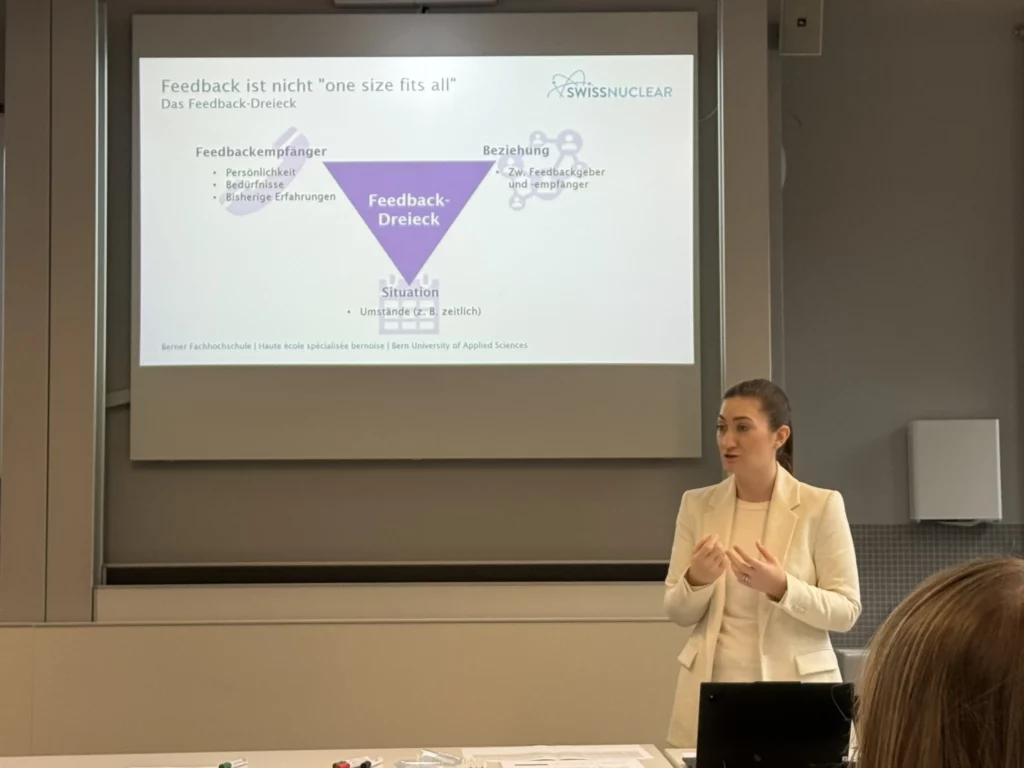
On January 30, 2026, students in the CAS program “Work Environment in the Nuclear Energy Sector” delved deeply into the topic of knowledge management in High Reliability Organizations (HROs) with Hedwig Schregle (Gösgen-Däniken Nuclear Power Plant AG) and Alessia I. Bargetzi (Leibstadt Nuclear Power Plant AG). The discussion centered on the following questions: How do we actually learn? And what does this mean for HROs?
Knowledge arises from the interplay of the brain, experience, emotions, the body, the environment, and the social context. People learn differently and absorb different things. An individual’s level of knowledge and wealth of experience play an important role here, because our brains build upon what we have learned previously.
It has been scientifically proven that neural plasticity is maintained well into old age. Even older adults can still learn new things easily. The key is whether they can build on existing experiences. For example, if someone learned foreign languages at an early age, they will still find it easy to do so even at 60 or 70.
Under stress, our brain switches to autopilot, and the information processing center becomes restricted. A short break helps to restore our ability to absorb new information.
There are various forms of knowledge:
· Procedural knowledge (e.g., riding a bike—through practice)
· Episodic knowledge (experiences with an emotional impact)
· Semantic knowledge (expertise, rules, concepts)
Especially in HROs, employees’ implicit experiential knowledge is crucial.
The 4E Cognition Model illustrates the multidimensional nature of the learning process:
· Embodied: Learning with the body—movement supports thinking
· Enactive: Understanding arises through action
· Embedded: Learning is socially embedded (e.g., godparent models, learning with experts)
· Extended: Tools expand our cognitive capabilities (e.g., simulators, checklists, digital aids)
Knowledge transfer requires structure:
Knowledge transfer is crucial in nuclear power plants to ensure the safe operation of a facility across multiple generations.
Learning always involves stepping outside one’s comfort zone, but without becoming overwhelmed. Only in this way can sustainable competence develop.
Conclusion: Knowledge management in HROs is far more than just documentation. It is a continuous learning process, supported by culture, communication, mutual trust, and psychological safety. The success of the learning process depends crucially on how we shape the conditions that enable it. 🪴🤝
🔎 Further information about CAS:
CAS Working Environment Nuclear Energy