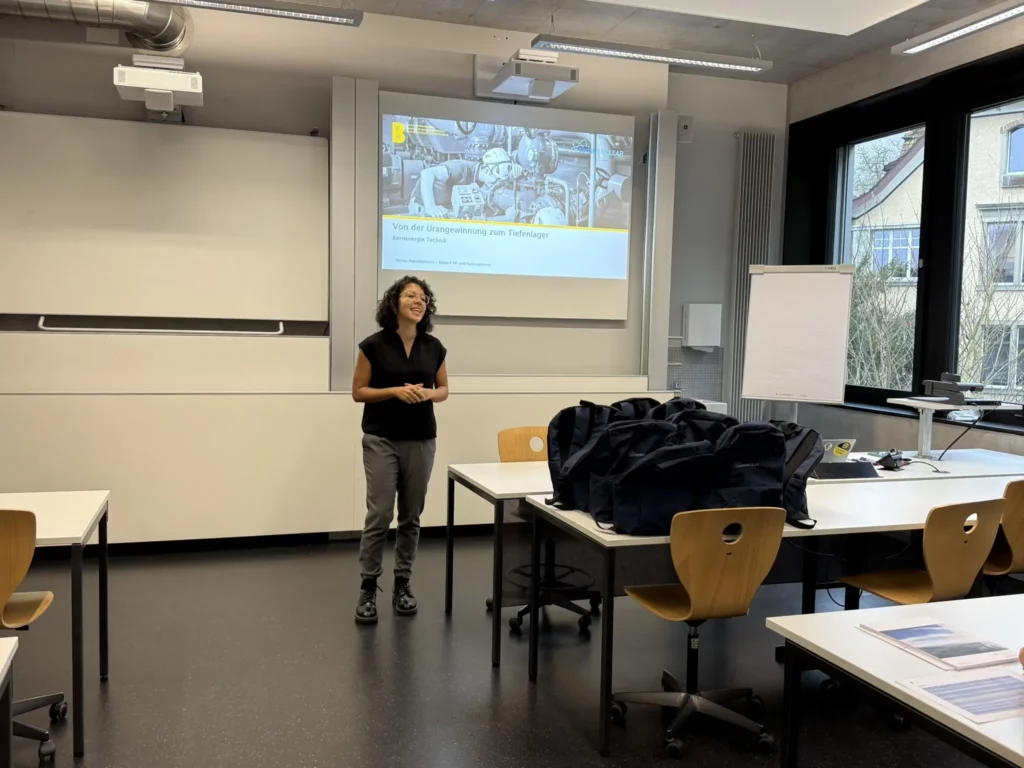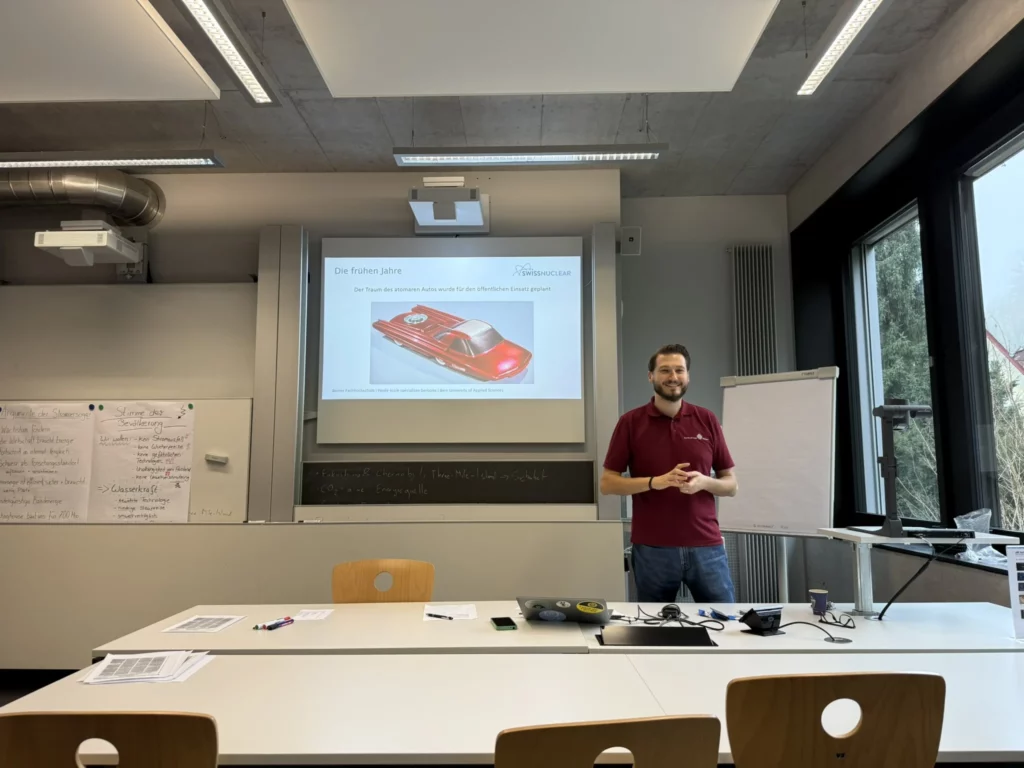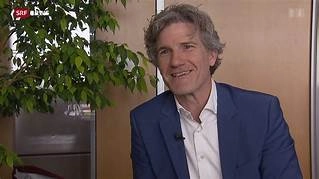
On November 7, 2025, the new CAS "Working Environment Nuclear Energy" course, offered by Bern University of Applied Sciences (BFH) in collaboration with swissnuclear, was launched. The first course took place at the ABB Technical School in Baden with 12 students.
Under the guidance of Petros Papadopoulos, nuclear engineer and lecturer at the Nuclear Technician School (NTS), the students delved deep into the world of nuclear energy—from the physical fundamentals and the formation of uranium in stardust ✨ to safety and social issues.
✅ Nuclear energy as part of the solution:
Nuclear energy is alow-carbon, reliable source of energy—around one-third of Switzerland's electricity supply comes from nuclear power, and in winter this figure rises to half. At the same time, nuclear energy remains an emotionally and politically charged issue.
🌠 From stardust to fuel:
Uranium—an element of cosmic origin—can be understood as a kind of "extended solar energy." Petros Papadopoulos took the students on an exciting journey through time: from the beginnings of nuclear research to today's reactors, he showed how science, technology, and safety thinking have continuously evolved.
💡 Learning from history:
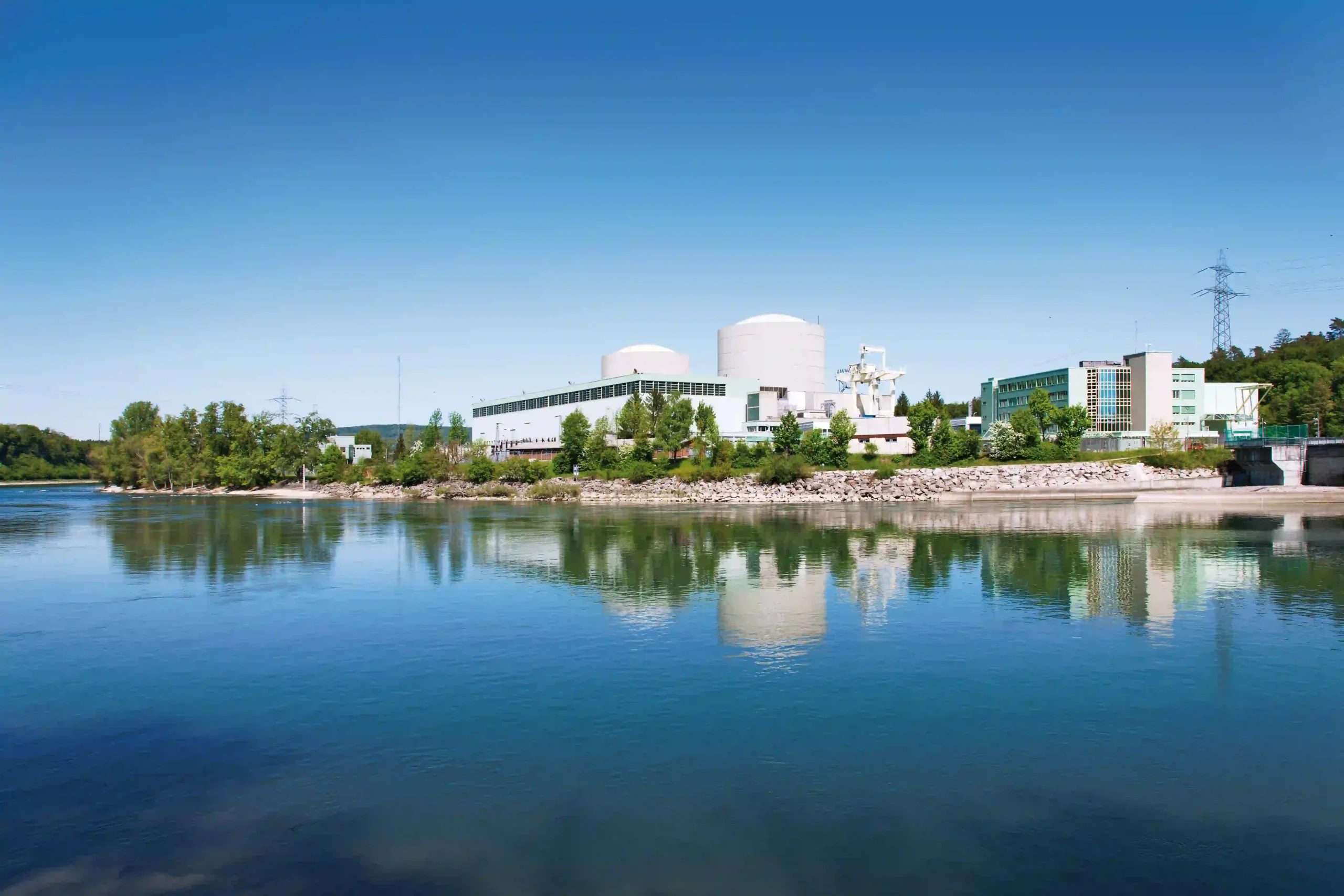
The history of nuclear energy in Switzerland—from the origins of the Paul Scherrer Institute to the plants in Beznau, Mühleberg, Gösgen, and Leibstadt—is closely linked to technical innovation, knowledge exchange, and ongoing development.
⚛️ Looking ahead:
Nuclear energy continues to evolve—and remains central to climate targets, security of supply, and technological progress.
🔎 Further information about CAS:
CAS Working Environment Nuclear Energy