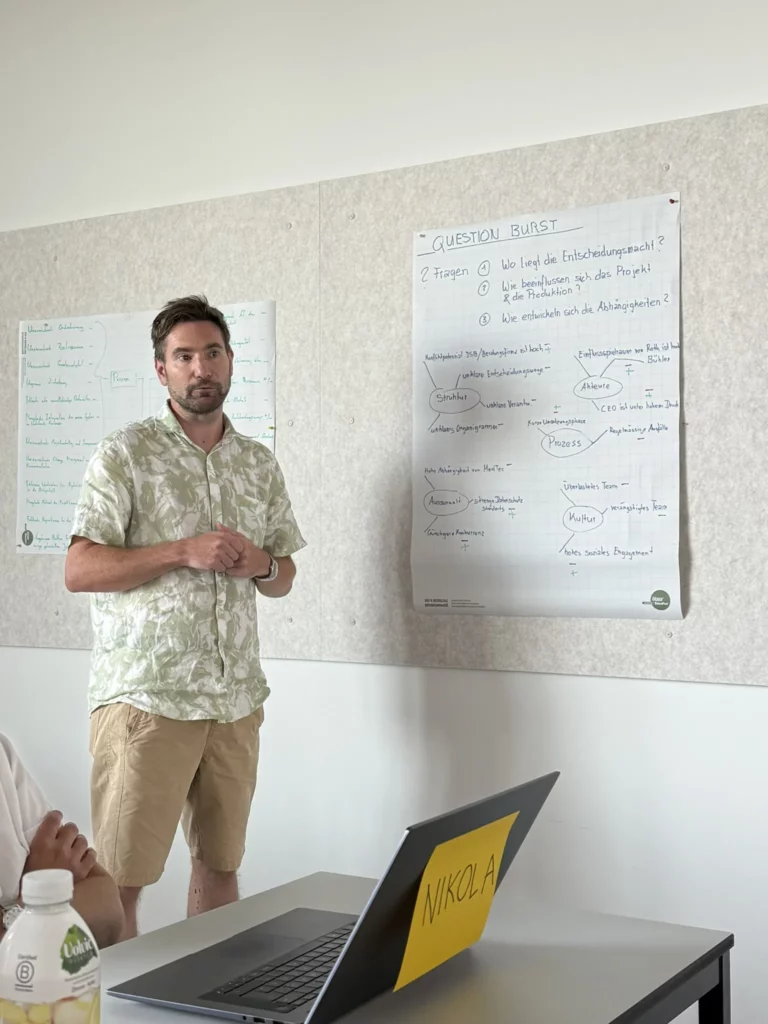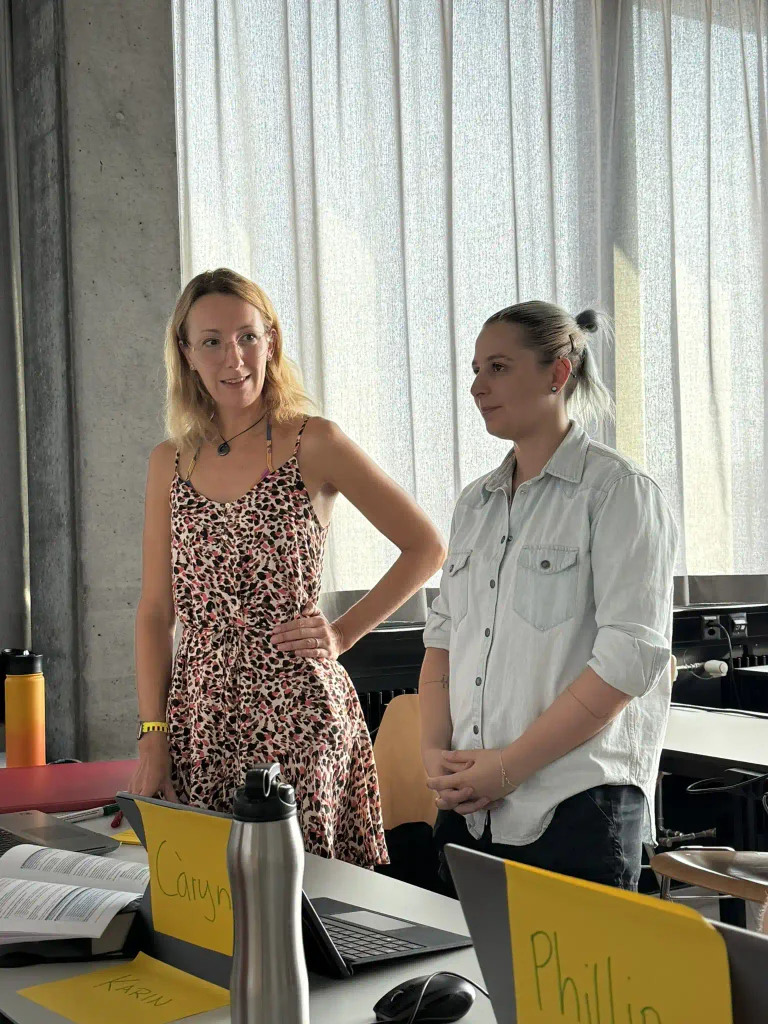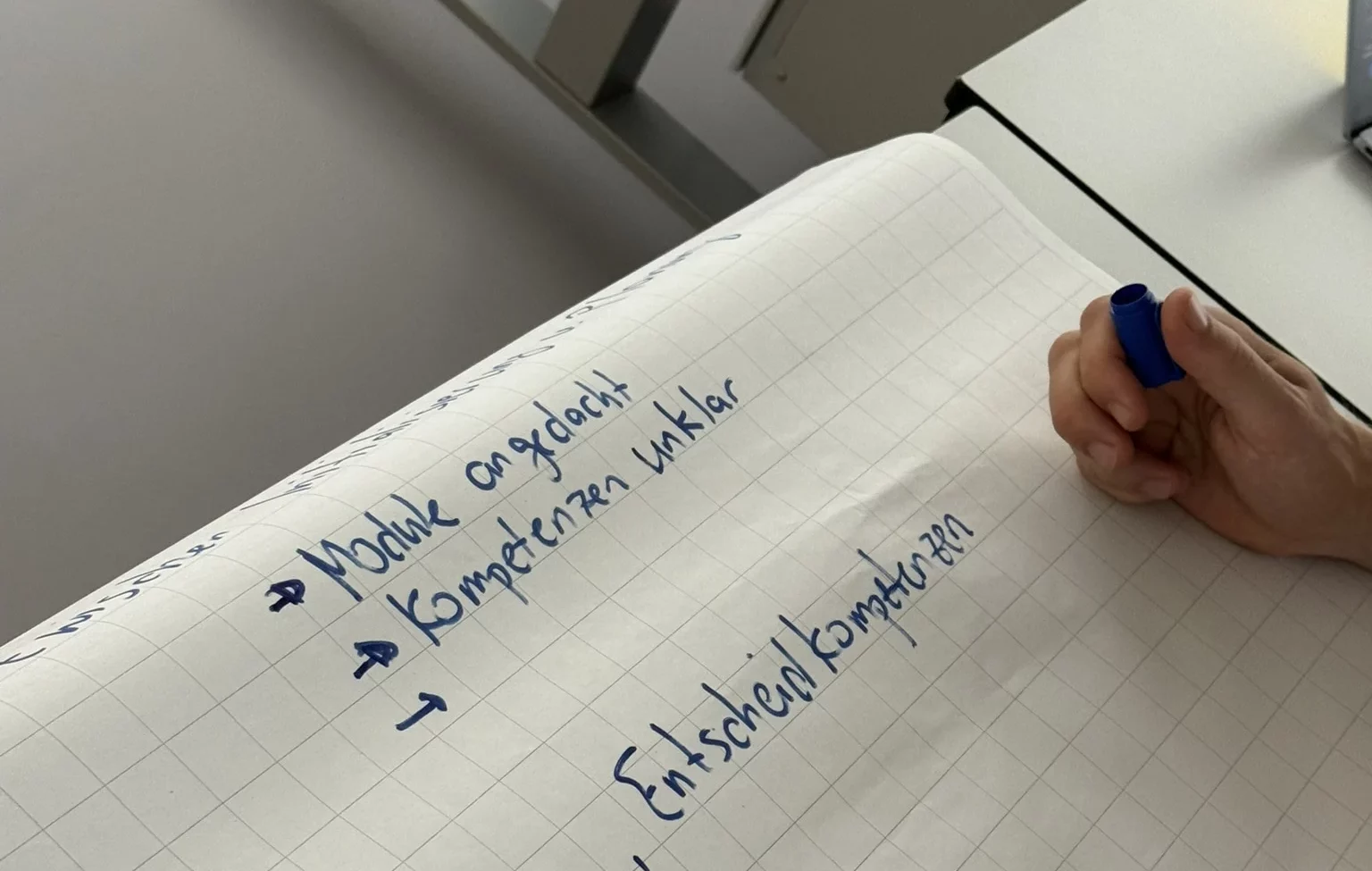
On Friday, August 14, 2026, the course “Practical Update on Project Management” began as part of the CAS program “Work Environment in the Nuclear Energy Sector.” Brigitte Hulliger and Marcel Zahnd from the Bern University of Applied Sciences (BFH) led an intensive first day of the course—full of thought-provoking insights.
💡One insight has really stuck with me: Understand first, then act.
Project management has changed. 🤖 AI has long been a reality and has now made its way into project management as well. At the same time, traditional, agile, and hybrid project management are no longer three separate approaches, but rather tools in the same toolbox. 🧰
What hasn’t changed: The human factor remains crucial to a project’s success or failure. 🤝
⚙️ One focus was on systems thinking and complexity. After all, many projects fail not due to a lack of skill, but because of an incorrect diagnosis of the initial situation.
👉 Complicated is not the same as complex.
🔹 A complicated situation can be difficult and require expert knowledge—but its interrelationships can generally be analyzed.
🔹 A complex situation, on the other hand, does not develop in a fully predictable manner. Factors influence one another, and feedback loops arise.
Anyone who treats a complex situation as if it were a complicated one may be using precise tools—but unfortunately, the wrong ones.
👉 That is why a diagnosis should always precede the choice of any method.
Various diagnostic tools were presented, including VUCA and BANI, the Cynefin Framework, and the Systemic Solution Cycle (SSC).
The SSC consists of five phases:
1️⃣ Gather variables
2️⃣ Connect the dots and understand
3️⃣ Find levers
4️⃣ Derive measures
5️⃣ Reflect
Complex projects in particular require multiple cycles: act, observe, learn, and readjust.
🧠 To wrap up, we explored Dietrich Dörner’s six thinking traps—ranging from methodism to the isolated consideration of individual problems, all the way to ballistic control and overcontrol.
💡 Conclusion: Good project management doesn’t mean strictly following a specific method, but rather first understanding the situation correctly and then selecting the appropriate tools. 🛠️
🔎 Further information about CAS:
CAS Working Environment Nuclear Energy | BFH