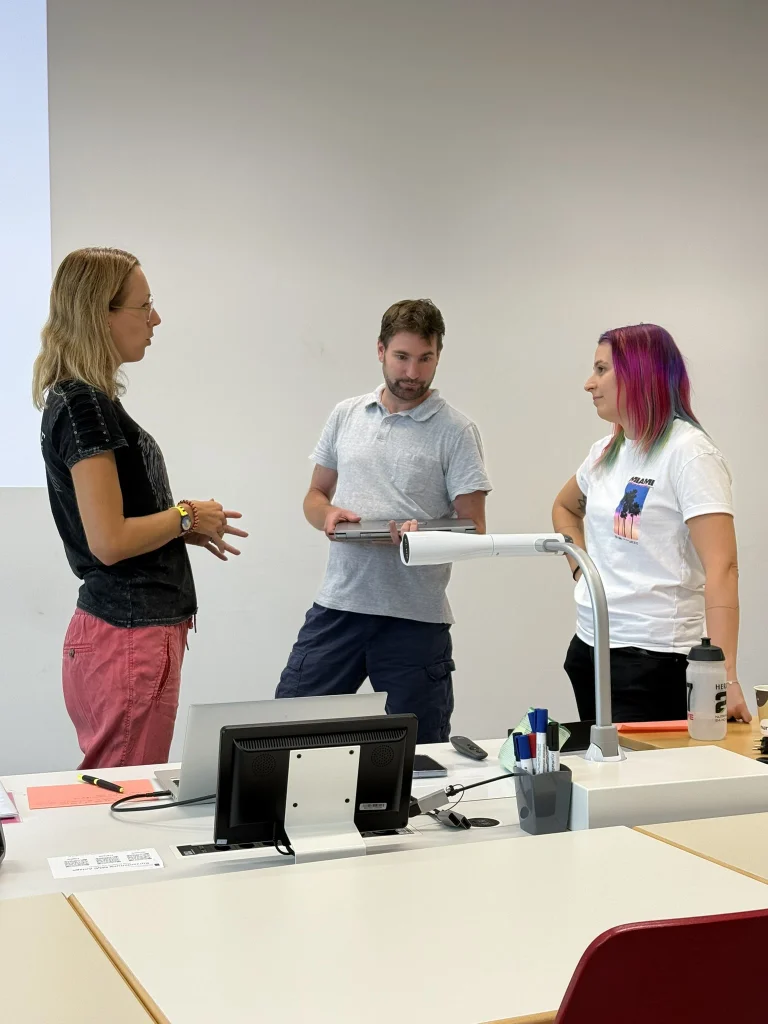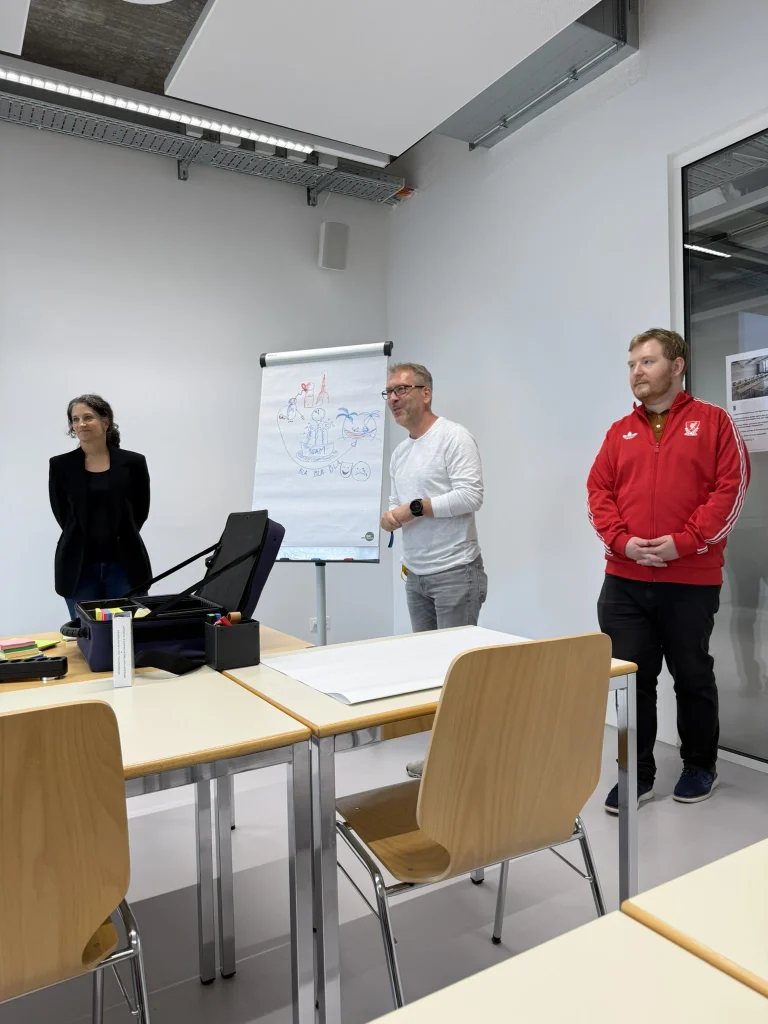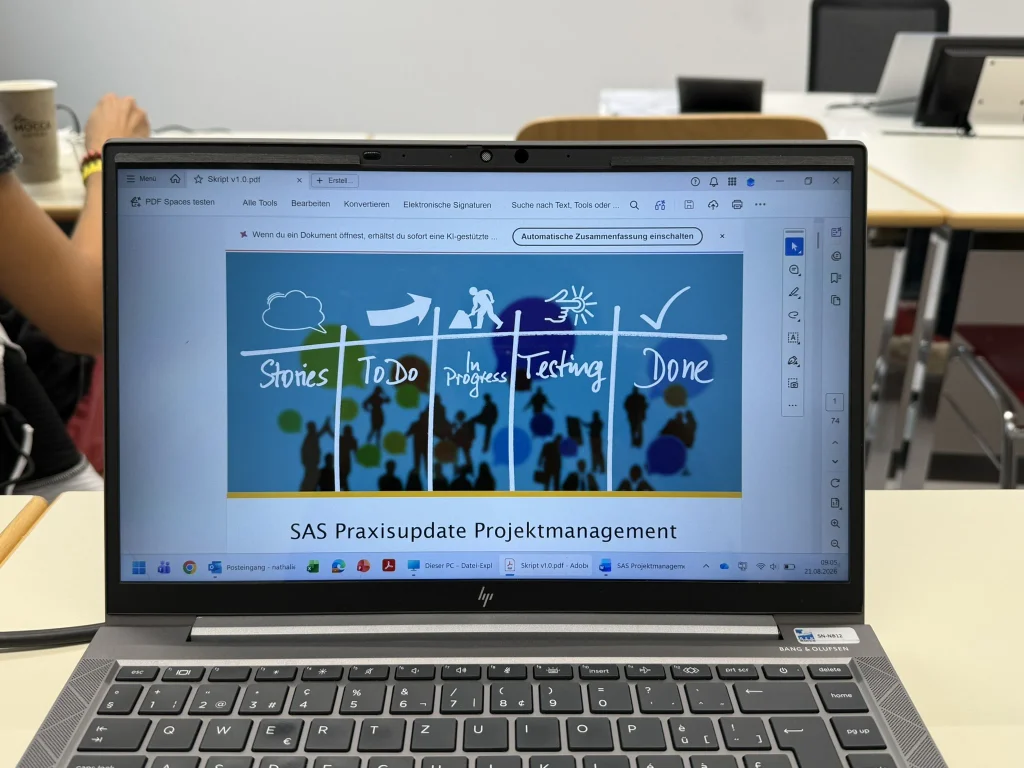
The second module of the “Project Management Practice Update” focused on a factor that plays a decisive role in determining a project’s success or failure: people.
Marchel Zahnd and Brigitte Hulliger from the Bern University of Applied Sciences (BFH) led another exciting day of training—filled with insights, discussions, role-playing exercises, and one central question:
👉 How do you lead people on a project when you don't have the authority to give orders—and what do you do when there's conflict within the team?
Projects rarely fail solely because of methodology or technology. Often, the causes lie elsewhere: unclear roles, conflicting interests, time pressure, conflicting goals, or dependencies without a formal hierarchy. Anyone who dismisses these issues as “soft factors” underestimates their impact on deadlines, costs, and, ultimately, the success of the project.
💡This makes four leadership levers all the more important:
🔹Clarity: Make goals, roles, and expectations clear.
🔹Trust: Act reliably, identify problems early, and admit your own mistakes.
🔹Involvement: Involve those affected and make sound decisions together.
🔹Transparency: Make progress, obstacles, and successes transparent.
Project teams go through various stages of development. 🌱 Tuckman's model describes these stages as Forming, Storming, Norming, Performing, Aging, and Adjourning.
The "storming" phase is particularly interesting: Roles are questioned, expectations clash, and conflicts come to light. This isn't necessarily a sign that a team isn't functioning properly; rather, it can be a necessary part of its development.
An important prerequisite for a successful team is psychological safety: Team members must be able to ask questions, voice doubts, point out mistakes, and disagree without fear of negative consequences.
👉 Team development doesn't happen on its own; it's a leadership responsibility.
What if it still crashes? 🌩️
Conflicts are an inevitable part of projects. When resources are scarce, deadlines are tight, responsibilities are unclear, and goals differ, tensions arise.⚡
The key is not to avoid conflicts, but to address them as early as possible and in a constructive manner. It can also be helpful to illustrate a situation in order to gain an overview and better understand it.
💡 Addressing issues early on isn’t unnecessary confrontation—it’s caring. It prevents small tensions from turning into major conflicts.
After all, in the end, projects aren't carried out by methods, but by people. 🤝
🔎 Further information about CAS:
CAS Working Environment Nuclear Energy | BFH